
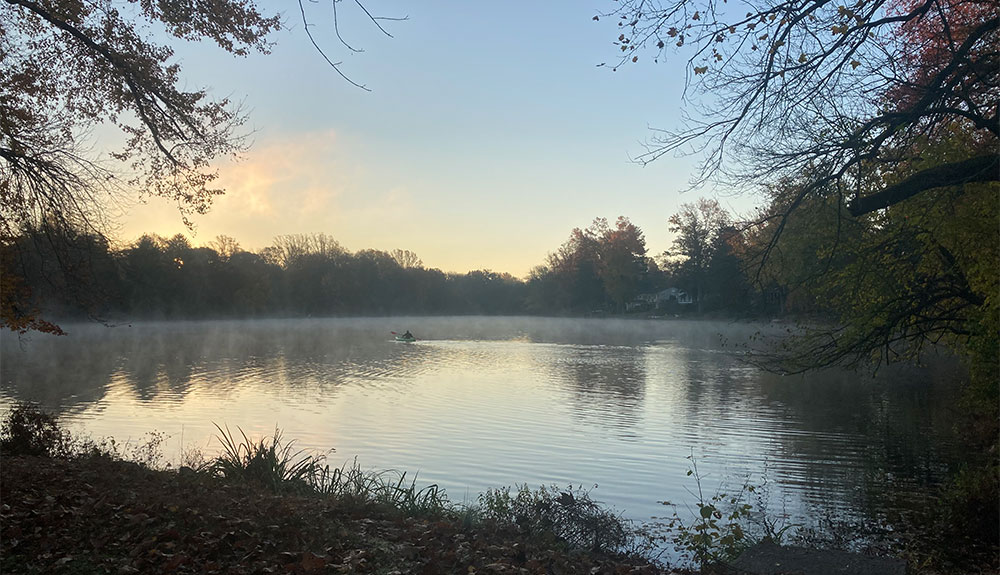
Nestled snugly in the fertile farmlands of Lower Makefield Township is a small, ten-acre body of water known variously as Hampton Lake (1820’s), White’s Lake (1880’s), Dickel’s Lake, Silver Lake, and Makefield Lakes. The land about this lake is rich in historic tradition. It was farmed by families who traced their ancestry to the earliest of the colonial settlers, men who knew William Penn, a friend and neighbor.
1874 – 1914
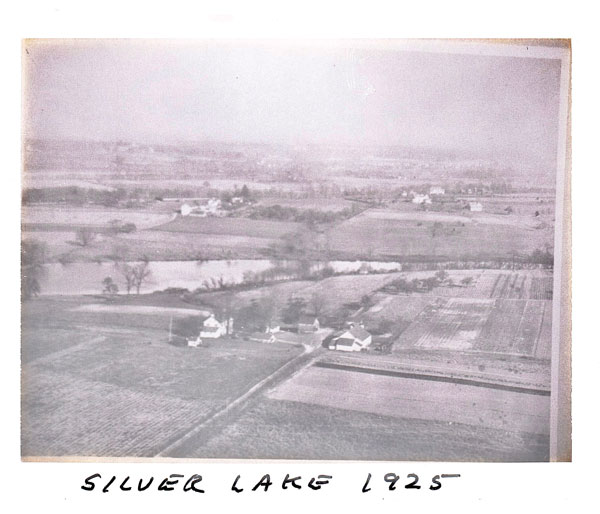
Silver Lake, a spring-fed body of water, was enlarged, excavated, and dammed by the Delaware and Bound Brook Railroad to provide a ready supply of water for the company’s steam engines when the railroad was chartered in 1874. The Delaware and Bound Brook Railroad had stations along a circuitous route from Jenkintown to Bound Brook, New Jersey, crossing the Delaware River at Yardley. Water from the lake was pumped into a small reservoir near the railroad and from there, into a water tower which in turn supplied the engines. Some of the water from the lake was also directed into a long raceway which stretched across Yardley and dumped into Lake Afton, long a familiar part of the village’s scenery. From here it flowed into a mill stream where it turned the great wheel of the Yardley mill.
By 1876, the lake was providing water to three railroads – the Delaware and Bound Brook, the Philadelphia and Reading, and the Central Railroad of New Jersey. The railroads formed a new route from New York to Philadelphia just in time to carry happy excursioners to the famous Centennial Exposition in the Quaker City in July 1876.
A depot was built the same year and called Yardley by the railroad. Later, the community responded by changing its original name of Yardleyville to Yardley when the town was incorporated.
The Reading System absorbed the stock of the Delaware and Bound Brook in 1879 and made this route the Reading’s main line the New York. Silver Lake continued to serve to Reading Railroad until 1914, when the line built a new pumping station and resevoir nearby, which still serve Lower Makefield residents. Later, as railroading was advanced and steam engine design became more sophisticated, the water was pumped into quarter-mile long troughs built between the tracks and was then scooped up by the trains as they passed by. In the extremely cold winter of 1936, a hundred men were involved in chopping ice in these troughs to keep it from freezing the tracks.
1930s – Present
As recent as the 1930’s, the lake also provided ice for the neighboring farms. The ice was cut into large blocks, and hauled by wagon to the farmer’s ice houses, where it was stored for use during the warm summer months.
Not far from the Makefield Lakes was Moon’s Nursery, famous throughout the East for its flowers and shrubs, and one of the oldest businesses of its type in the county. Great horse-drawn wagons would lumber out through the gates, loaded for eastern markets.
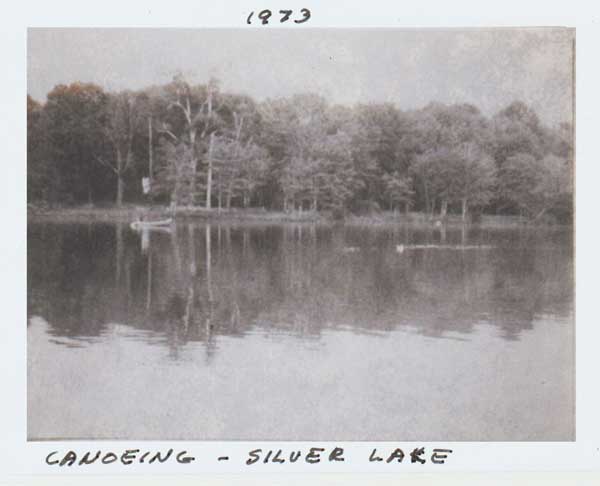
In its second phase, Silver Lake became the playground of a boy’s day camp, operated from the 1930s into the early 1950s by Capies Staudemyer, a popular football coach at Trenton High School. For fifty cents a day each, about 25 boys attended the camp from June until September. They learned crafts like woodcarving and leather-working, and played at water sports, swimming, canoeing and rowing. In the center of the lake were two permanent rafts, one for juniors and another for seniors. One of the rafts was still intact until the early I960’s.
Construction of homes on Orchard Way began in 1941, on what was an asparagus farm. Construction on Harvey Drive and Green Ridge Road was between 1949 and 1954. Construction was also taking place along Morningside Avenue during this period.
At this time, the Little Silver Lake (below the main dam) was a swamp. In 1955, it was dug out and four lakeside properties on Lakeshore Drive were developed, and the “Makefield Lakes” were established. Between 1957 and 1964 homes were built on Lakeview Drive, Serene Lane, and Weinmann Way. In the late 1960’s and early 1970s, Carriage Hill subdivision was developed as well as the homes on Deerpath Lane.
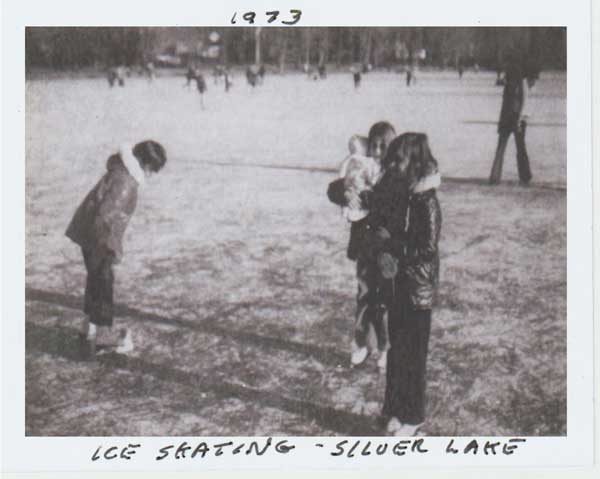
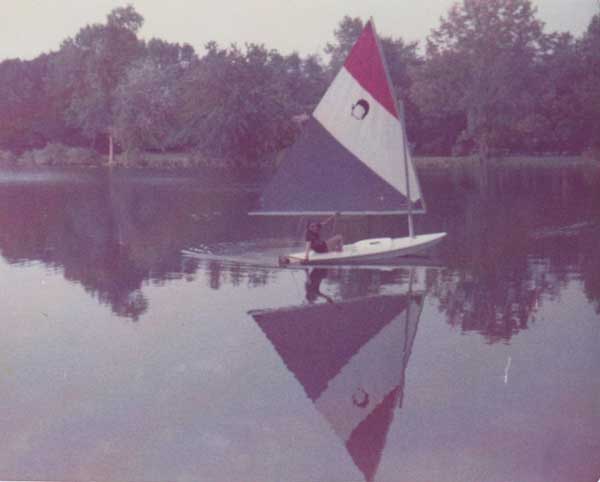
Throughout its history, Silver Lake has been an important nature preserve and source of relaxation and quiet enjoyment for the community. Many enjoy fishing, boating, and ice skating which have always been popular. It is the path of many strollers and joggers and an excellent site for bird watching or just enjoying the solitude of the area.
Silver Lake Through the Years
 Makefield Lakes Community Association